
Permanent Overband Magnetic Separator for Aggregate Production Lines
In an aggregate processing plant, a single piece of unwanted steel can interrupt an entire production line. Excavator teeth, drill fragments, broken bolts, wire, and worn machine parts may enter the material stream during extraction and transportation. Once these contaminants reach a crusher or screening system, they can cause serious equipment damage, unexpected downtime, and costly maintenance.
This is why tramp iron removal should be considered at the conveyor stage, not only after a problem occurs. A Permanent Overband Magnetic Separator installed above a conveyor can attract ferrous contaminants out of moving aggregate before they reach critical equipment. For quarry operators handling crushed stone, gravel, and sand, the objective is straightforward: protect the production line while keeping material moving.
The Hidden Cost of Tramp Iron in Aggregate Processing
Aggregate production involves several stages, including extraction, primary crushing, secondary crushing, screening, and stockpiling. Material passes through multiple conveyors, transfer points, and machines. During these operations, iron contamination can enter from both the raw material and the equipment itself.
Large steel pieces are particularly dangerous when they reach crushers. A broken excavator tooth or metal plate can damage internal components, while long pieces of rebar or sharp steel may tear conveyor belts. Even when a contaminant does not cause immediate damage, it can create an unplanned shutdown while operators locate and remove it.
The risk is not limited to the crusher. Screens, feeders, transfer chutes, and downstream handling equipment may also be affected. For plants operating on tight production schedules, one interruption can influence the output of several connected processes.
A Permanent Overband Magnetic Separator provides an additional protection point by removing magnetically responsive metal while aggregate is being conveyed. Instead of relying entirely on manual inspection, operators can capture ferrous contaminants before they travel farther through the plant.
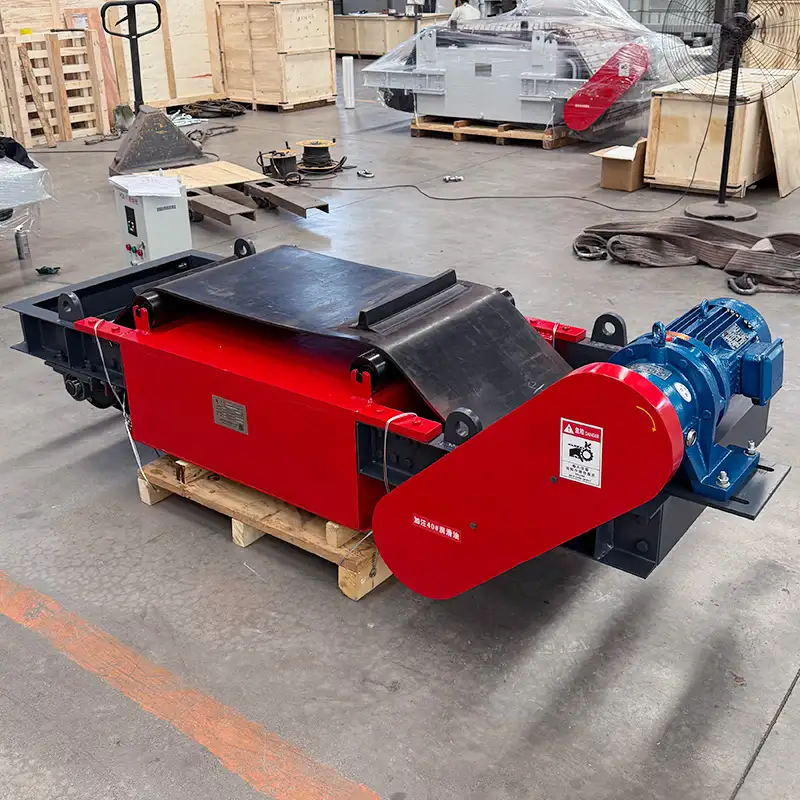
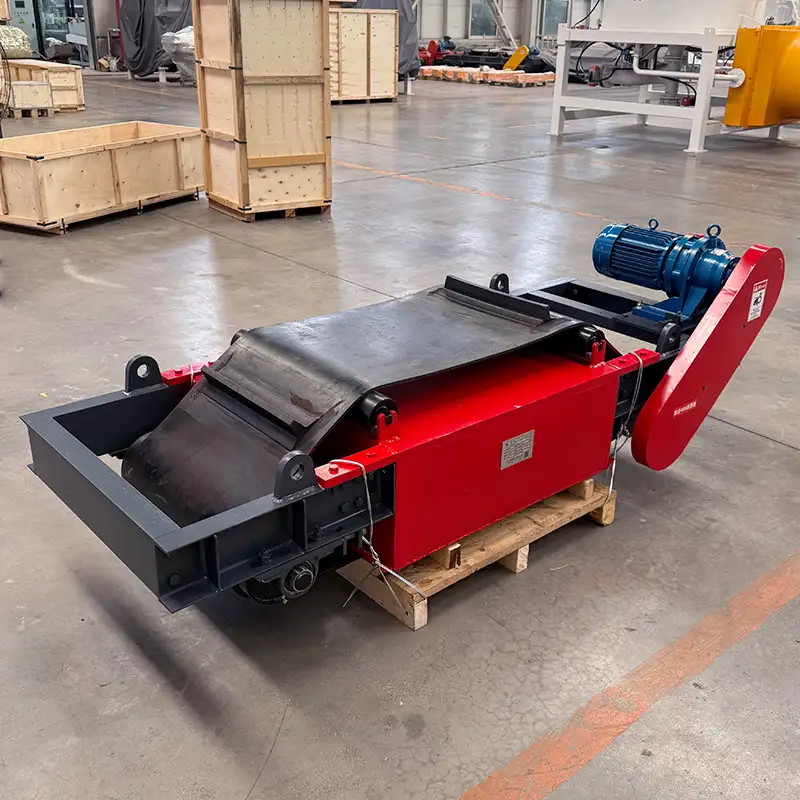
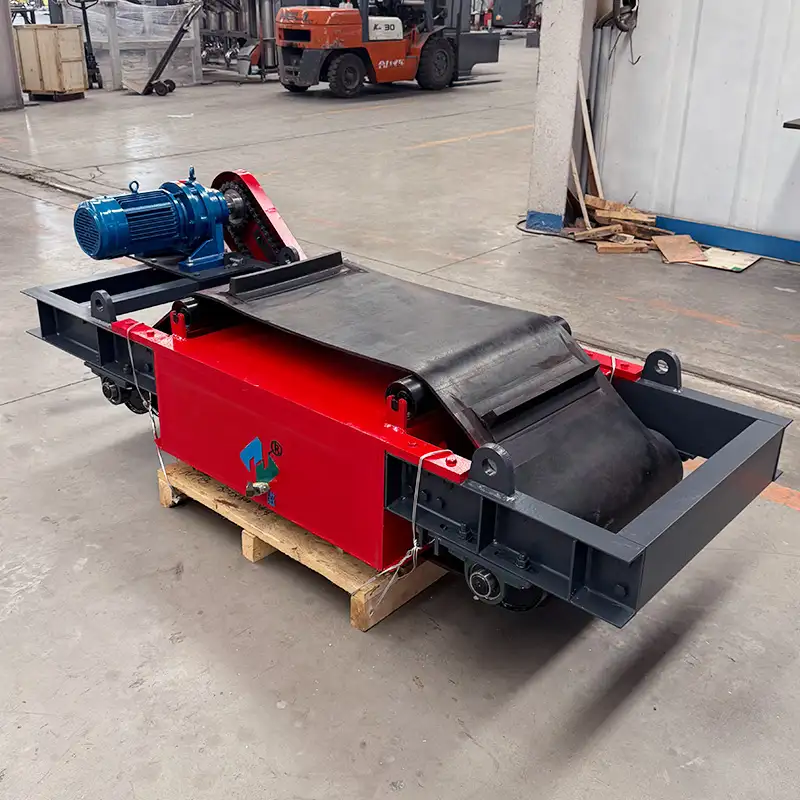
Where Should a Conveyor Magnet Be Installed?
Installation position has a direct influence on separation performance. A magnet should be positioned where the material burden, belt arrangement, and available working space allow tramp iron to be attracted and removed effectively.
One common location is above the conveyor feeding a primary or secondary crusher. At this point, removing large steel objects can help protect expensive crushing equipment. Another possible location is above a transfer conveyor, where material movement may expose iron pieces that were previously buried inside the aggregate burden.
A Conveyor Belt Magnet can also be considered on mobile crushing and screening equipment. Mobile plants often have limited installation space and changing operating conditions, so the support frame, clearance, vibration, and access for maintenance need careful review.
For some conveyor layouts, positioning the magnet near the head pulley may improve access to material as it leaves the belt. The best arrangement depends on belt direction, material depth, magnet suspension height, and the size and shape of the target metal. A Conveyor Belt Magnet should therefore be selected as part of the complete conveyor layout rather than treated as an isolated component.
How a Permanent Overband Magnetic Separator Removes Iron
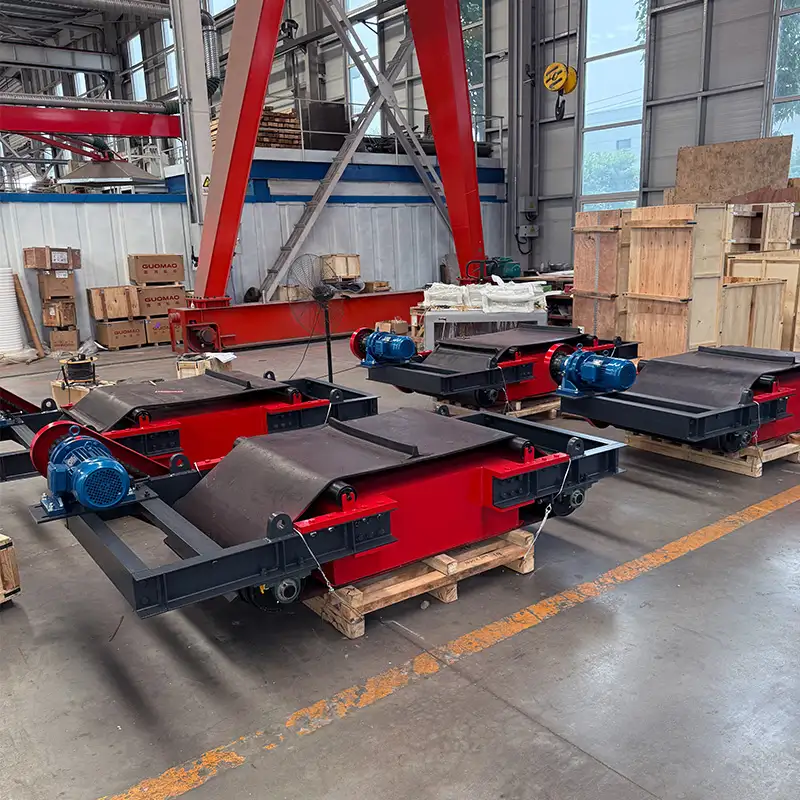
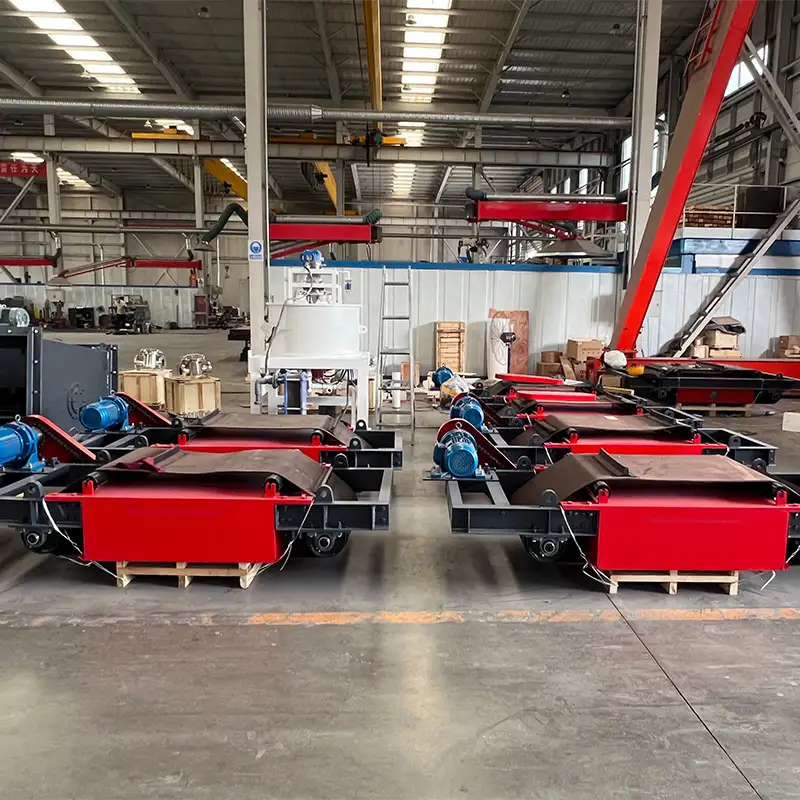
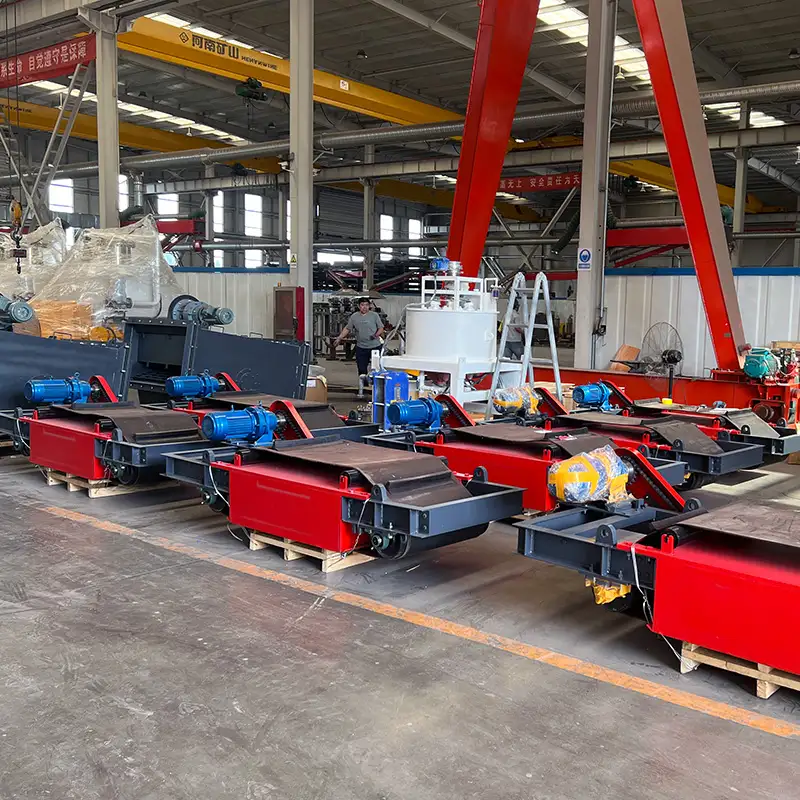
A Permanent Overband Magnetic Separator uses a permanent magnetic assembly to create a magnetic field above the conveyor. As aggregate passes beneath the unit, ferrous objects within the effective magnetic range are attracted upward and held against the magnet surface or carried away by the cleaning arrangement, depending on the equipment design.
In a manual-clean configuration, operators remove the captured metal during a planned and safely isolated maintenance stop. This arrangement may be suitable where iron contamination is occasional and the plant can accommodate periodic cleaning.
For applications with more frequent contamination, a self-cleaning design uses a moving belt to carry captured metal away from the active magnetic area and discharge it into a collection zone. This allows the conveyor to continue operating while separated iron is removed. The choice between manual cleaning and automatic discharge should reflect the expected contamination load, operating hours, and available maintenance access.
A Permanent Overband Magnetic Separator does not remove every type of metal. It is intended for ferrous contaminants and other materials with sufficient magnetic response. Non-ferrous metals such as aluminium and copper, as well as some manganese steel components, may require metal detection or a different separation process. Where these materials are a concern, a Conveyor Belt Magnet can be combined with a suitable metal detector as part of a broader contamination-control system.
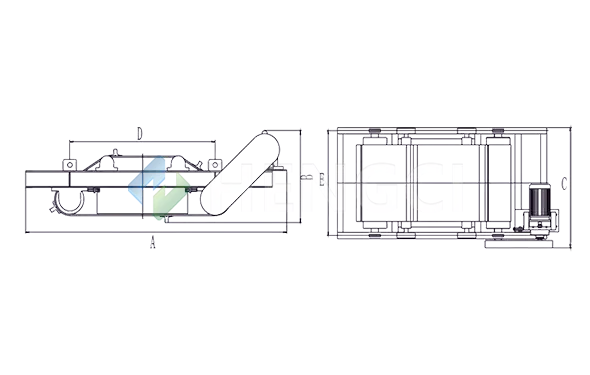
Permanent Magnet or Electromagnetic Overband?
Not every aggregate plant needs the same magnetic system. Permanent magnets offer continuous magnetic operation without an external electrical supply for magnet excitation. Their relatively simple operating arrangement can be attractive for applications where the burden depth, belt speed, and tramp iron conditions fall within the design capability.
Electromagnetic overband separators generate their magnetic field through an energized coil. Depending on the design, they may be selected for deeper material burdens, wider conveyors, higher tonnages, or more demanding separation duties. Cooling, power supply, and maintenance requirements should be considered as part of the overall operating cost.
The decision should not be based on magnet type alone. A Permanent Overband Magnetic Separator may be suitable for one conveyor but insufficient for another conveyor in the same quarry. Belt width, belt speed, material depth, bulk density, suspension height, and the expected size and frequency of iron contaminants all affect the required magnetic performance.
For a Conveyor Belt Magnet installation, it is also important to consider the available discharge space. Captured steel must have a clear route away from the product stream. If the separated metal falls back onto the conveyor, the installation cannot provide the intended protection.
What Aggregate Producers Should Check Before Selection
Before choosing a Permanent Overband Magnetic Separator, operators should collect basic information about the conveyor and the material being handled. These details help suppliers assess the required magnetic strength, installation dimensions, and cleaning arrangement.
Important points include:
-
Conveyor width and belt speed: These determine the working area and the time available for separation.
-
Material burden depth: Deep layers can place tramp iron farther from the magnet and make separation more demanding.
-
Aggregate size and bulk density: Coarse, heavy material behaves differently from a shallow layer of smaller particles.
-
Target metal: The size, shape, orientation, and magnetic properties of the expected contaminants matter.
-
Suspension height: The distance between the magnet and the conveyor affects the magnetic field reaching the material.
-
Cleaning and discharge access: Operators need a safe way to remove collected iron or maintain the self-cleaning belt.
A Conveyor Belt Magnet should also be checked against the surrounding steel structure. Cross-members, support beams, and nearby equipment can influence installation space and maintenance access. The mounting frame must support the equipment under normal operating conditions and account for vibration from the conveyor system.
Keeping Magnetic Protection Effective During Daily Operation
Even a correctly selected magnet needs regular inspection. Operators should check for accumulated iron, damage to the cleaning belt, abnormal noise, loose fasteners, and changes in the conveyor's material loading. The frequency of inspection should reflect the amount of contamination and the working environment.
Quarry conditions can be abrasive and dusty. Protective covers, suitable structural support, and accessible maintenance points help the equipment withstand daily operation. If the plant changes its feed material, conveyor speed, or production capacity, the original magnetic arrangement should be reviewed again.
A Permanent Overband Magnetic Separator is one part of a wider equipment-protection strategy. In applications where the plant must also identify non-magnetic metal, a metal detector can provide an additional warning or shutdown signal. The combination should be designed around the actual risk rather than added without considering the process.
Matching the Magnetic Separator to the Quarry Operation
For aggregate producers, the right magnetic separator is the one that fits the conveyor, material burden, target contaminants, and maintenance routine. A Permanent Overband Magnetic Separator can provide continuous magnetic protection without an excitation power supply, while a self-cleaning arrangement can reduce the need for repeated manual removal when tramp iron occurs frequently.
Hengci supplies magnetic separation equipment for industrial material handling applications. When reviewing a project, the conveyor width, belt speed, material depth, installation height, and expected iron contamination should be considered together. These details help determine whether a permanent suspended magnet, a self-cleaning overband design, or another separation arrangement is more appropriate.
A properly selected Conveyor Belt Magnet helps reduce the risk of ferrous objects reaching crushers, screens, and other downstream machinery. For quarry operators, this is not simply a matter of removing metal from aggregate. It is a practical step toward protecting equipment, controlling interruptions, and maintaining a more dependable production process.
Vertical Ring High Gradient Magnetic Separator for High-Purity Quartz
Related Article



Need Assistance? We're Here To Help!
Enter your information and our team will reach out to you shortly.