
Roller Magnetic Separator for Non-Metallic Mineral Processing
For non-metallic mineral producers, the value of a raw material is often determined by what remains after impurities are removed.
Quartz, feldspar, silica sand, kaolin, alumina, abrasive minerals, and other industrial minerals may contain small amounts of iron-bearing or weakly magnetic particles. These impurities may represent only a small percentage of the feed, but they can have a significant influence on product purity, color, whiteness, and suitability for demanding downstream applications.
This is where a Roller Magnetic Separator becomes an important part of dry mineral purification.
Unlike conventional magnetic separation that focuses primarily on recovering strongly magnetic ores, a Roller Magnetic Separator is often used to clean non-metallic minerals by selectively removing weakly magnetic contaminants from an otherwise valuable non-magnetic product.
For manufacturers of high-purity mineral materials, the objective is not simply to separate magnetic and non-magnetic particles. It is to achieve a more consistent feedstock while maintaining high recovery of the valuable mineral.
Why Iron Removal Matters in Non-Metallic Minerals
Many non-metallic minerals are valued for their chemical and physical properties. However, even relatively small quantities of iron-bearing contamination can affect the final product.
In quartz and silica sand, for example, iron-containing impurities can influence the appearance and quality of the material used in glass and other high-purity applications. Feldspar producers may also need to control iron-bearing minerals when supplying raw materials for ceramics and glass.
This makes magnetic separation an important purification step.
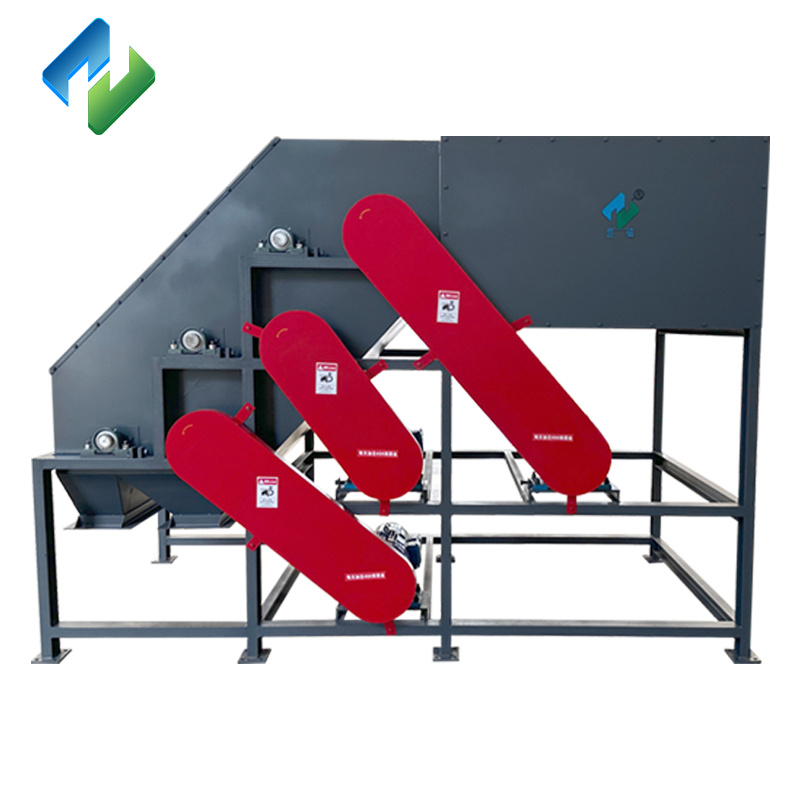
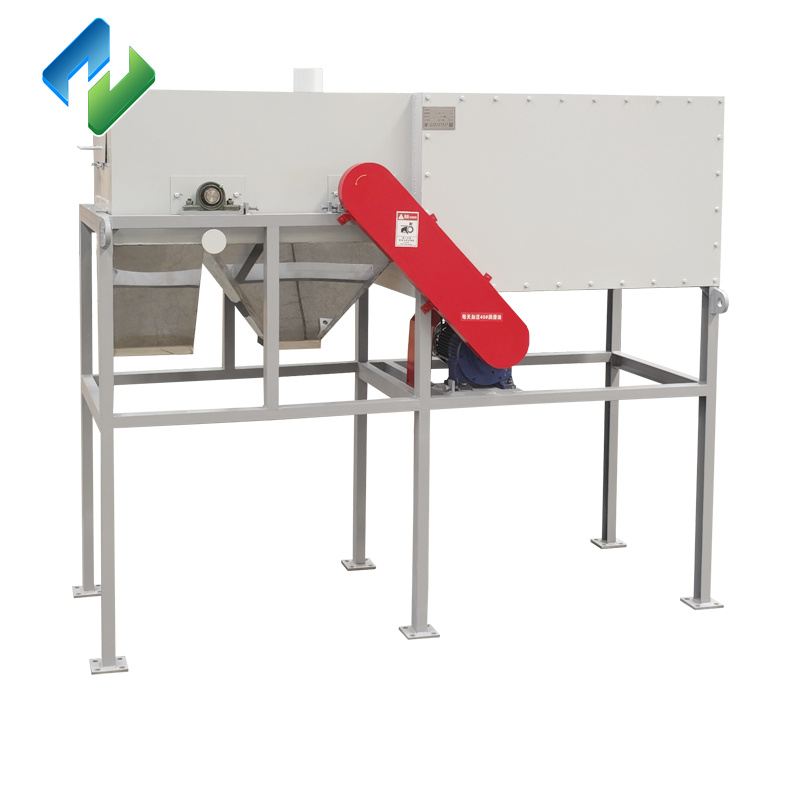
A Dry Roller Magnetic Separator can process dry, free-flowing mineral feed without converting the material into slurry. This is particularly useful when the production process is designed around dry screening, grinding, classification, and final product packaging.
Dry high-intensity roll separation is widely associated with the purification of industrial minerals such as silica sand, quartz, feldspar, and other non-metallic materials.

From Mineral Recovery to Mineral Purification
The role of magnetic separation changes significantly when the target product is a non-metallic mineral.
In iron ore processing, the magnetic fraction may be the valuable product. In quartz or feldspar processing, the valuable fraction is generally the non-magnetic material, while magnetic particles are treated as unwanted contaminants.
A Roller Magnetic Separator therefore works as a purification tool rather than simply a mineral recovery machine.
The separation system creates a magnetic field around the roller surface. Magnetic or weakly magnetic particles experience magnetic attraction, while non-magnetic particles follow a different trajectory.
The two fractions can then be separated using an adjustable splitter or similar discharge arrangement.
This approach allows manufacturers to focus on the purity of the non-magnetic product rather than simply maximizing magnetic recovery.
How a Roller Magnetic Separator Handles Weakly Magnetic Contaminants
The main challenge in non-metallic mineral purification is that many unwanted impurities are not strongly magnetic.
Fine iron-bearing minerals, mica, biotite, muscovite, chromite, and other paramagnetic particles may require a stronger magnetic field and a carefully controlled separation zone.
A High Intensity Magnetic Separator is designed for this type of application. By generating a strong magnetic field and high magnetic gradient, the equipment can attract particles that would not necessarily be captured effectively by a conventional low-intensity magnetic separator.
Industrial rare-earth roll separators are specifically used for removing weakly magnetic particles from dry products, including silica sand, feldspar, beach sands, silicon carbide, magnesite, and other industrial minerals.
For non-metallic mineral producers, this difference can be critical when the required product specification is strict.
Quartz Purification with a Roller Magnetic Separator
Quartz is one of the most important applications for dry magnetic purification.
Raw quartz may contain iron-bearing minerals or other magnetic impurities introduced during geological formation, mining, crushing, grinding, and handling.
A Roller Magnetic Separator can be installed after suitable crushing, grinding, and classification stages to remove magnetic contaminants from the dry quartz feed.
The objective is to improve the purity of the quartz while maintaining as much usable non-magnetic material as possible.
This can be especially important when quartz is being prepared for higher-value applications where chemical purity, color, and low iron content are important.
Research on feldspar has also demonstrated the use of dry rare-earth roll magnetic separation for iron oxide removal, showing how roll-type high-intensity magnetic separation can be applied to non-metallic mineral purification.
Feldspar Processing and Iron Removal
Feldspar is another major application for a Dry Roller Magnetic Separator.
Feldspar used in ceramics and glass may require controlled iron content because iron-bearing impurities can affect the appearance and performance of the final material.
After crushing and grinding, the feldspar can be classified into a suitable particle-size range before entering the magnetic separation stage.
The High Intensity Magnetic Separator then provides a controlled environment for removing weakly magnetic contaminants while allowing the majority of feldspar particles to continue as the purified product.
For producers dealing with variable raw materials, magnetic separation can also provide greater consistency between different batches.
This is important when downstream customers require stable mineral quality rather than simply a high production volume.
Silica Sand and Glass-Grade Mineral Purification
Silica sand is another important application for a Roller Magnetic Separator.
In glass production, the quality of the raw silica feed can have a direct influence on the final product. Magnetic contaminants are therefore undesirable when producing higher-quality sand.
A Dry Roller Magnetic Separator can be integrated into the dry processing circuit to remove weakly magnetic impurities from the sand.
The advantage of a dry process is that the mineral remains dry during separation. This avoids the need to create a slurry and subsequently remove water through dewatering and drying.
Dry high-intensity roll separation is used commercially for silica sand and other industrial minerals where weakly magnetic contaminants need to be removed.
Kaolin, Ceramics and Other Industrial Minerals
The application range of a High Intensity Magnetic Separator extends beyond quartz and feldspar.
Depending on mineral properties and particle size, dry magnetic purification can also be considered for kaolin, alumina, garnet, chromite, magnesite, silicon carbide, refractory materials, and other industrial minerals.
For ceramic raw materials, the purpose is often to reduce iron-bearing contamination before the material enters subsequent forming and firing processes.
For abrasive and refractory materials, removing unwanted magnetic particles can help maintain the consistency of the finished product.
A Roller Magnetic Separator is particularly useful when the feed is already dry and the production line requires continuous processing.
Commercial high-intensity roll systems are used across industrial minerals, ceramics, abrasives, refractories, and other dry-material applications.
Why Dry Separation Can Be Valuable for Non-Metallic Minerals
Water is not always an advantage in mineral processing.
When the final product must remain dry, introducing water creates additional processing steps. The material may need to be dewatered, dried, or otherwise conditioned before it can continue to packaging or downstream manufacturing.
A Dry Roller Magnetic Separator avoids the need for slurry formation during the magnetic purification stage.
This can simplify the process for dry mineral producers and reduce dependence on water infrastructure.
Dry separation is particularly attractive in applications where water availability is limited or where the finished mineral product needs to remain dry.
For plants already using dry crushing, screening, and classification, integrating a dry magnetic roller can also create a more consistent process flow.
Controlling Product Purity Without Excessive Mineral Loss
Removing more magnetic material is not always the same as achieving a better product.
A separation process must balance impurity removal with valuable mineral recovery.
If the magnetic field is too aggressive, some valuable non-metallic particles associated with weakly magnetic impurities may be lost. If the separation force is insufficient, unwanted contaminants may remain in the final product.
A Roller Magnetic Separator allows the process to be adjusted according to the characteristics of the feed.
Roll speed, feed rate, material layer thickness, magnetic field configuration, and splitter position can all influence the final separation result. Commercial roll separators commonly use adjustable operating parameters to optimize separation for different materials.
This is why material testing is an important step before selecting the final machine configuration.
Particle Size Has a Major Influence on Dry Magnetic Separation
Particle size is one of the most important factors when applying a High Intensity Magnetic Separator to non-metallic minerals.
If particles are too coarse, magnetic impurities may remain locked inside larger particles and cannot be separated effectively. If particles are extremely fine, adhesion and particle interaction may reduce separation selectivity.
Proper crushing, grinding, screening, and classification can therefore have a major influence on the magnetic separation result.
Commercial rare-earth roll separators are available for a range of dry particle sizes, while research on dry high-intensity magnetic separation also shows that particle size and fine-particle behavior can strongly influence separation performance.
The magnetic separator should therefore be selected as part of the complete mineral preparation process rather than considered independently.
Multi-Stage Roller Magnetic Separation for Higher Purity
Some non-metallic mineral applications require more than one magnetic separation stage.
A first stage can remove the stronger magnetic contaminants, while a subsequent stage can target weaker magnetic particles.
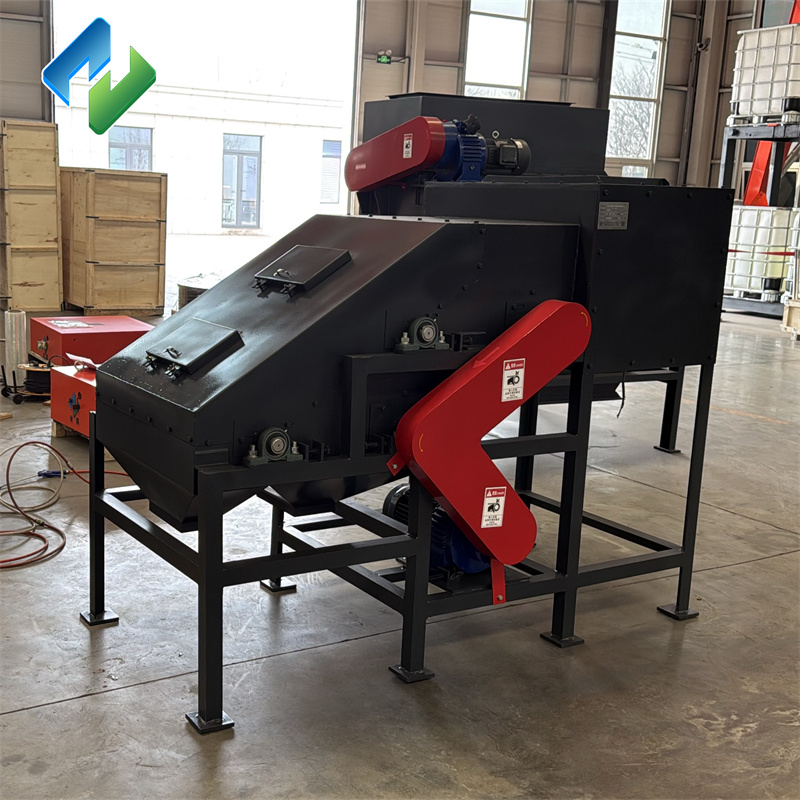
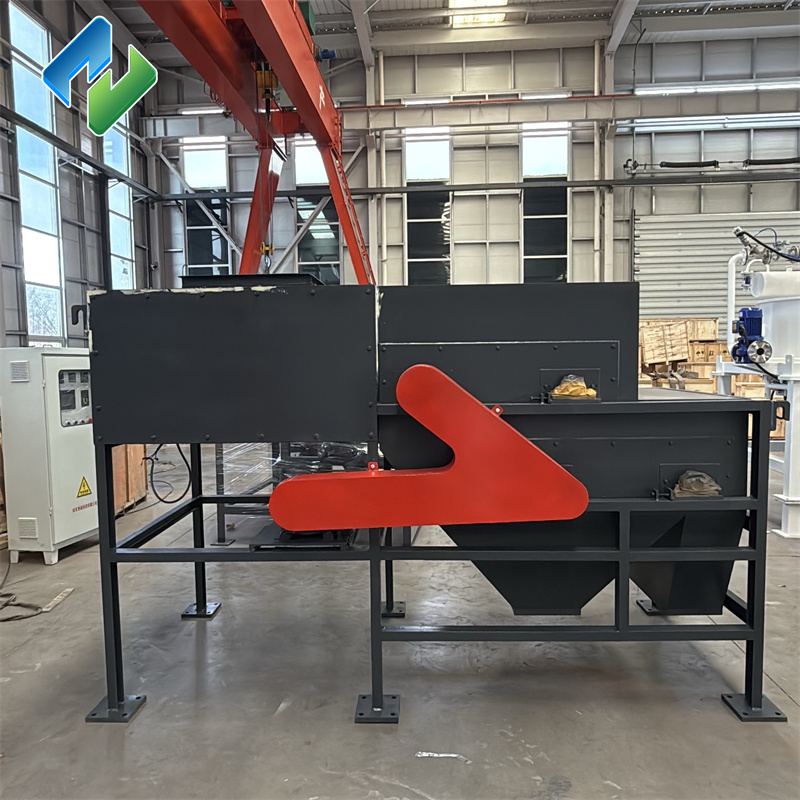
A Roller Magnetic Separator can be configured as a single-stage or multi-stage system depending on the required product specification.
Multi-stage designs are particularly useful when the raw material contains different types of magnetic contaminants with different magnetic susceptibilities.
The objective is to gradually improve mineral purity rather than trying to achieve the entire separation in one aggressive pass.
Commercial roll separator systems are available in one-, two-, and three-roll configurations for different separation requirements.
Reducing Processing Costs Through Dry Mineral Purification
Mineral purification is ultimately an economic decision.
A producer must consider not only the purity of the final material but also energy consumption, water requirements, equipment maintenance, material recovery, and throughput.
A Dry Roller Magnetic Separator can provide a dry purification stage without requiring process water. Permanent rare-earth magnetic systems can also generate strong magnetic fields without continuously consuming electrical power to create the magnetic field itself.
For plants processing large quantities of quartz, feldspar, silica sand, or other industrial minerals, these operating characteristics can contribute to a more economical purification process.
The actual benefit, however, depends on the feed material and required product specification.
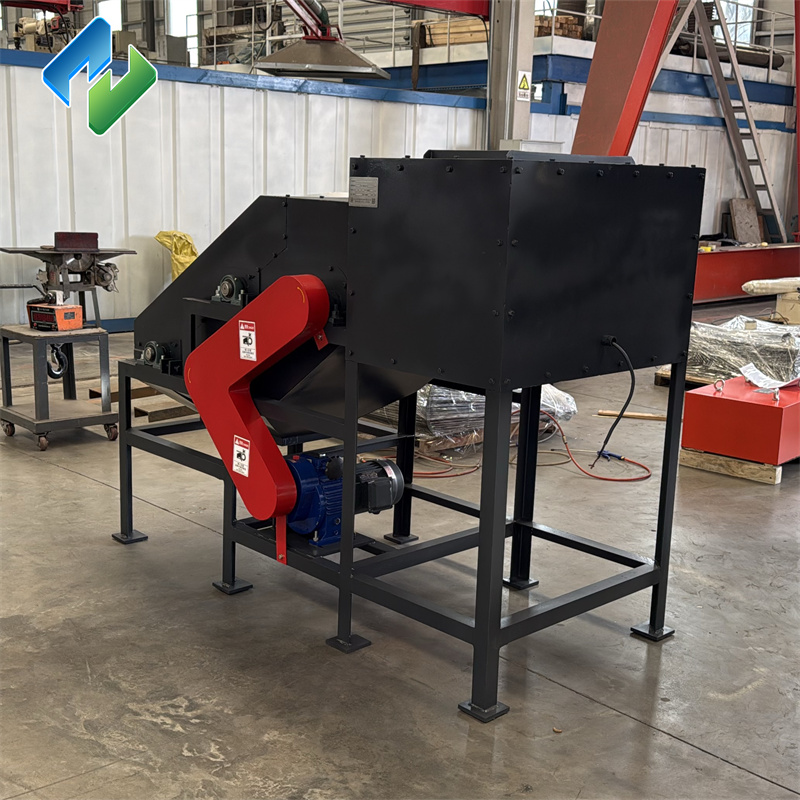
Choosing a High Intensity Magnetic Separator for Non-Metallic Minerals
Selecting a High Intensity Magnetic Separator should begin with the material rather than the machine.
Before choosing a configuration, producers should evaluate:
- Mineral type and chemical composition
- Magnetic susceptibility of the contaminants
- Feed particle-size distribution
- Feed moisture
- Required production capacity
- Target iron or magnetic impurity level
- Required final product purity
- Expected recovery of valuable non-magnetic material
A dry magnetic roller generally requires free-flowing feed. Excessive surface moisture can cause particles to agglomerate and interfere with separation.
For difficult materials, laboratory or pilot testing can help determine the appropriate magnetic intensity, feed rate, roller speed, and splitter position before full-scale installation.
Where to Install a Roller Magnetic Separator
The best location for a Roller Magnetic Separator depends on the process flow.
In a quartz or feldspar plant, it may be installed after grinding and classification when the material has reached an appropriate particle size.
In a silica sand purification line, the separator may be positioned before the final product storage or packaging stage.
For ceramic raw materials, magnetic purification may be placed before the material enters subsequent preparation or forming processes.
The key is to present the material evenly to the magnetic field and ensure that the feed characteristics are suitable for dry separation.
An even material layer helps the magnetic system interact more consistently with individual particles, improving separation control.
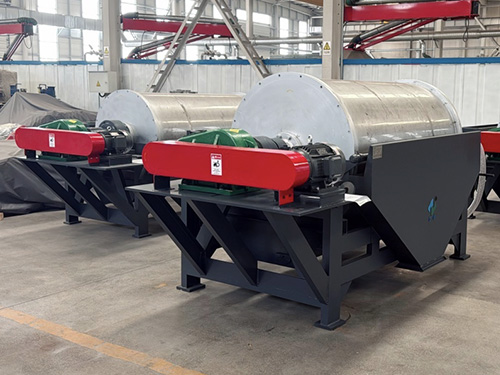
Hengci Roller Magnetic Separator for Non-Metallic Minerals
Hengci provides dry magnetic separation equipment for mineral purification and industrial material processing.
The Roller Magnetic Separator can be configured for applications involving quartz, feldspar, silica sand, ceramic raw materials, abrasive minerals, and other non-metallic materials where iron-bearing or weakly magnetic impurities need to be reduced.
Depending on the material and required purity, Hengci can configure the Dry Roller Magnetic Separator according to feed size, processing capacity, magnetic intensity, and separation stages.
For demanding purification applications, a High Intensity Magnetic Separator provides the magnetic force required to target weakly magnetic contaminants while maintaining a controlled dry separation process.
The final equipment configuration should always be determined according to actual material testing and production requirements.
Conclusion
For non-metallic mineral producers, small quantities of magnetic contamination can have a disproportionate effect on product value.
A Roller Magnetic Separator provides a dry and continuous method of removing weakly magnetic impurities from valuable materials such as quartz, feldspar, silica sand, kaolin, and other industrial minerals.
A properly selected Dry Roller Magnetic Separator can help improve product purity without introducing water into an otherwise dry processing circuit. When the feed contains difficult weakly magnetic contaminants, a High Intensity Magnetic Separator can provide the magnetic field and gradient needed for more demanding purification applications.
The most effective solution is not simply the machine with the highest magnetic field. It is the configuration that matches the mineral properties, particle size, moisture, throughput, and final product specification.
For non-metallic mineral processing, magnetic separation is ultimately about producing a cleaner and more consistent mineral product while keeping the overall process efficient and commercially practical.
Dry Magnetic Separator for Metal Ore Processing and Beneficiation
How Magnetic Drums Protect Crushers in Aggregate Plants
Related Article
Need Assistance? We're Here To Help!
Enter your information and our team will reach out to you shortly.